

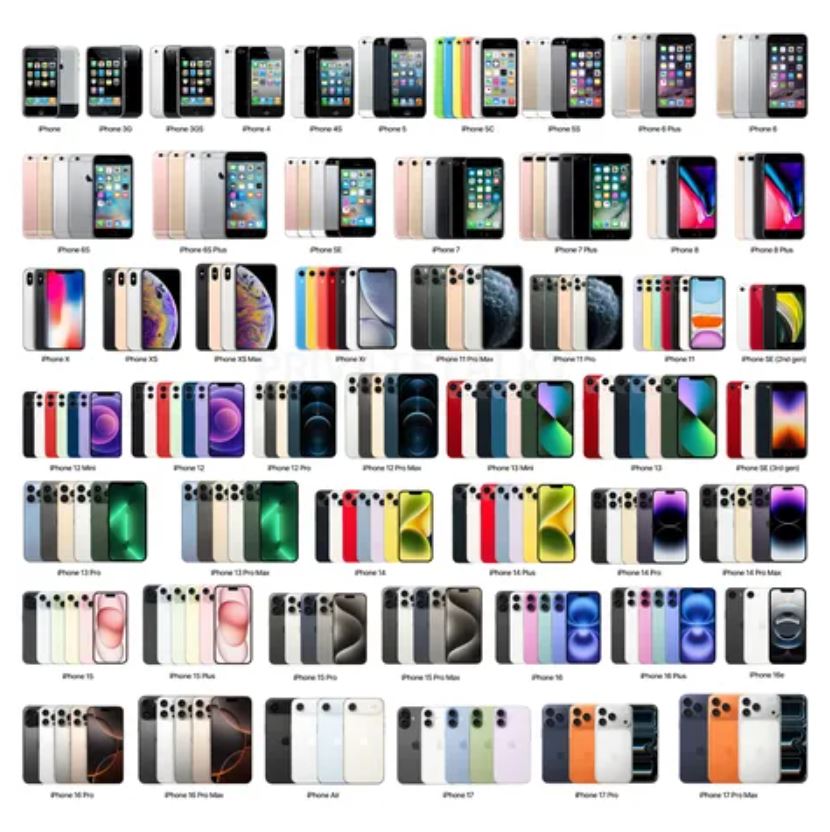

Apple has released dozens of iPhone models since the original iPhone launched in 2007. Over the years, screen sizes have grown from just 3.5 inches to as large as 6.9 inches, while display technology has evolved from LCD panels to advanced OLED and ProMotion displays.
Whether you’re shopping for a new iPhone, comparing older models, designing mobile apps, or creating digital content, understanding iPhone screen sizes and resolutions is essential.
This guide includes a complete iPhone size chart, screen dimensions, display resolutions, and recommendations to help you find the right iPhone size in 2026.
Why iPhone Screen Size and Resolution Matter
The size and resolution of an iPhone display directly affect usability, content consumption, app design, and overall user experience.
For developers and designers, understanding screen dimensions helps:
- Create responsive interfaces.
- Optimize UI and UX across devices.
- Maintain visual consistency.
- Improve app accessibility and usability.
For marketers and content creators, screen specifications are equally important for:
- Designing mobile-friendly creatives.
- Creating App Store screenshots.
- Optimizing social media graphics.
- Improving ad engagement and conversion rates.
Understanding Key Display Terms
Screen Size
Screen size refers to the diagonal measurement of a display, measured in inches from one corner to the opposite corner.
Resolution
Resolution is the number of pixels displayed on the screen horizontally and vertically.
Common resolution standards include:
- HD: 1280 × 720 pixels
- Full HD: 1920 × 1080 pixels
- QHD: 2560 × 1440 pixels
- 4K UHD: 3840 × 2160 pixels
Pixels (px)
Pixels are the smallest visible units that make up an image on a digital display.
Points (pt)
Points are Apple’s logical measurement units used in iOS interface design.
Pixels Per Inch (PPI)
PPI measures pixel density. Higher PPI values generally produce sharper text and clearer images.
Apple iPhone Screen Size & Resolution Chart (2007–2026)
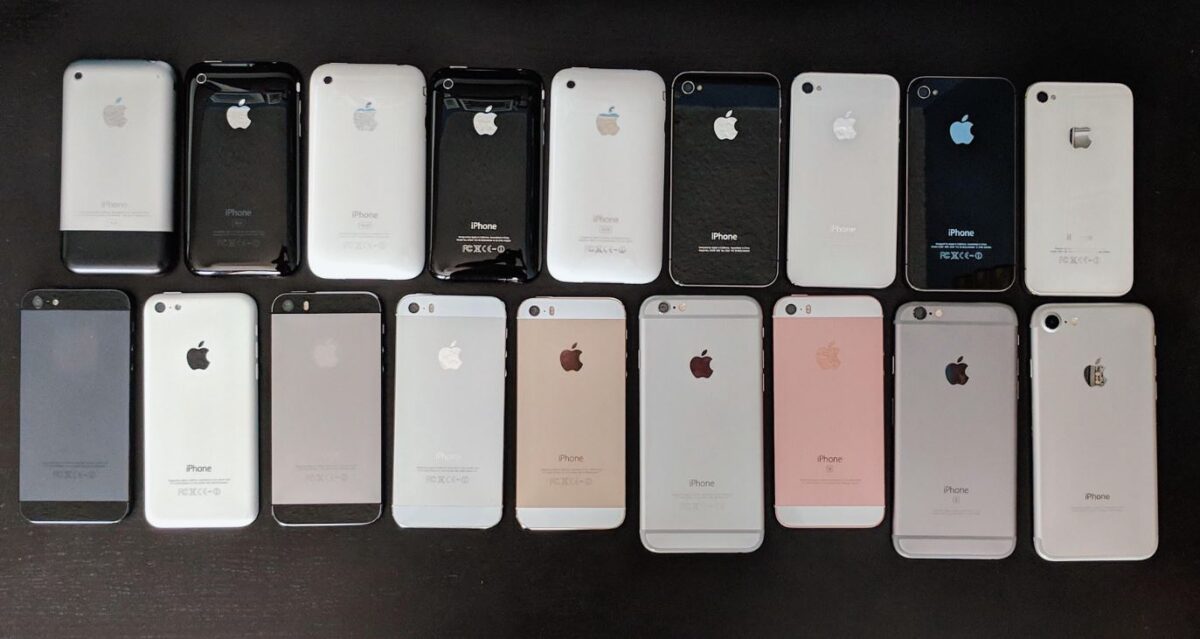
The table below compares every major iPhone generation by display size, resolution, dimensions, and display technology.
| Model | Year | Screen Size | Resolution | Display Type |
|---|---|---|---|---|
| iPhone (2G) | 2007 | 3.5″ | 480 × 320 | TFT LCD |
| iPhone 3G | 2008 | 3.5″ | 480 × 320 | TFT LCD |
| iPhone 3GS | 2009 | 3.5″ | 480 × 320 | TFT LCD |
| iPhone 4 | 2010 | 3.5″ | 960 × 640 | Retina LCD |
| iPhone 4S | 2011 | 3.5″ | 960 × 640 | Retina LCD |
| iPhone 5 | 2012 | 4.0″ | 1136 × 640 | Retina LCD |
| iPhone 5C | 2013 | 4.0″ | 1136 × 640 | Retina LCD |
| iPhone 5S | 2013 | 4.0″ | 1136 × 640 | Retina LCD |
| iPhone SE (1st Gen) | 2016 | 4.0″ | 1136 × 640 | Retina LCD |
| iPhone 6 | 2014 | 4.7″ | 1334 × 750 | Retina HD LCD |
| iPhone 6 Plus | 2014 | 5.5″ | 1920 × 1080 | Retina HD LCD |
| iPhone 6S | 2015 | 4.7″ | 1334 × 750 | Retina HD LCD |
| iPhone 6S Plus | 2015 | 5.5″ | 1920 × 1080 | Retina HD LCD |
| iPhone 7 | 2016 | 4.7″ | 1334 × 750 | Retina HD LCD |
| iPhone 7 Plus | 2016 | 5.5″ | 1920 × 1080 | Retina HD LCD |
| iPhone 8 | 2017 | 4.7″ | 1334 × 750 | Retina HD LCD |
| iPhone 8 Plus | 2017 | 5.5″ | 1920 × 1080 | Retina HD LCD |
| iPhone X | 2017 | 5.8″ | 2436 × 1125 | OLED |
| iPhone XR | 2018 | 6.1″ | 1792 × 828 | LCD |
| iPhone XS | 2018 | 5.8″ | 2436 × 1125 | OLED |
| iPhone XS Max | 2018 | 6.5″ | 2688 × 1242 | OLED |
| iPhone 11 | 2019 | 6.1″ | 1792 × 828 | LCD |
| iPhone 11 Pro | 2019 | 5.8″ | 2436 × 1125 | OLED |
| iPhone 11 Pro Max | 2019 | 6.5″ | 2688 × 1242 | OLED |
| iPhone SE (2nd Gen) | 2020 | 4.7″ | 1334 × 750 | LCD |
| iPhone 12 mini | 2020 | 5.4″ | 2340 × 1080 | OLED |
| iPhone 12 | 2020 | 6.1″ | 2532 × 1170 | OLED |
| iPhone 12 Pro | 2020 | 6.1″ | 2532 × 1170 | OLED |
| iPhone 12 Pro Max | 2020 | 6.7″ | 2778 × 1284 | OLED |
| iPhone 13 mini | 2021 | 5.4″ | 2340 × 1080 | OLED |
| iPhone 13 | 2021 | 6.1″ | 2532 × 1170 | OLED |
| iPhone 13 Pro | 2021 | 6.1″ | 2532 × 1170 | OLED |
| iPhone 13 Pro Max | 2021 | 6.7″ | 2778 × 1284 | OLED |
| iPhone SE (3rd Gen) | 2022 | 4.7″ | 1334 × 750 | LCD |
| iPhone 14 | 2022 | 6.1″ | 2532 × 1170 | OLED |
| iPhone 14 Plus | 2022 | 2778 × 1284 | 6.7″ | OLED |
| iPhone 14 Pro | 2022 | 2556 × 1179 | 6.1″ | OLED LTPO |
| iPhone 14 Pro Max | 2022 | 2796 × 1290 | 6.7″ | OLED LTPO |
| iPhone 15 | 2023 | 6.1″ | 2556 × 1179 | OLED |
| iPhone 15 Plus | 2023 | 6.7″ | 2796 × 1290 | OLED |
| iPhone 15 Pro | 2023 | 6.1″ | 2556 × 1179 | OLED LTPO |
| iPhone 15 Pro Max | 2023 | 6.7″ | 2796 × 1290 | OLED LTPO |
| iPhone 16 | 2024 | 6.1″ | 2556 × 1179 | OLED |
| iPhone 16 Plus | 2024 | 6.7″ | 2796 × 1290 | OLED |
| iPhone 16 Pro | 2024 | 6.3″ | 2622 × 1206 | OLED LTPO |
| iPhone 16 Pro Max | 2024 | 6.9″ | 2868 × 1320 | OLED LTPO |
| iPhone 17 | 2025 | 6.3″ | 2622 × 1206 | OLED |
| iPhone 17 Air | 2025 | 6.6″ | 2740 × 1260 | OLED |
| iPhone 17 Pro | 2025 | 6.3″ | 2622 × 1206 | OLED LTPO |
| iPhone 17 Pro Max | 2025 | 6.9″ | 2868 × 1320 | OLED LTPO |
iPhone Screen Size Evolution
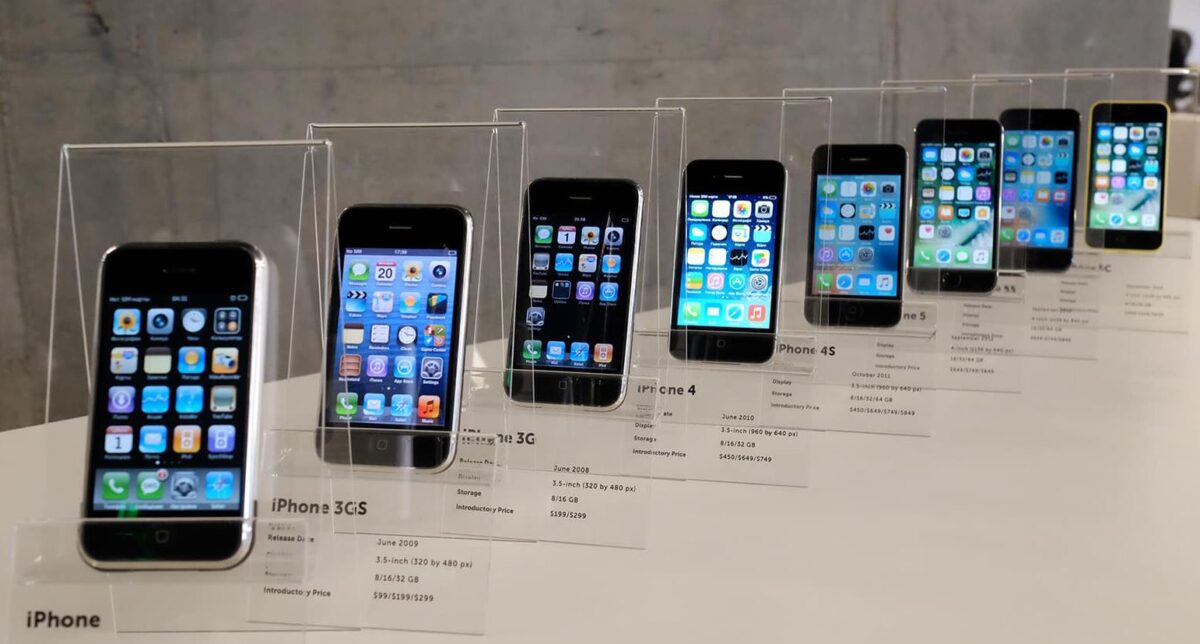
Apple’s iPhone lineup has evolved through several distinct display eras.
2007–2011: The 3.5-Inch Era
Models:
- iPhone
- iPhone 3G
- iPhone 3GS
- iPhone 4
- iPhone 4S
Display size: 3.5 inches
These devices established the foundation of the modern smartphone experience and were optimized for one-handed use.
2012–2016: The 4-Inch Era
Models:
- iPhone 5
- iPhone 5C
- iPhone 5S
- iPhone SE (1st Generation)
Display size: 4.0 inches
Apple increased screen size while maintaining a compact footprint.
2014–2022: The Rise of Large Displays
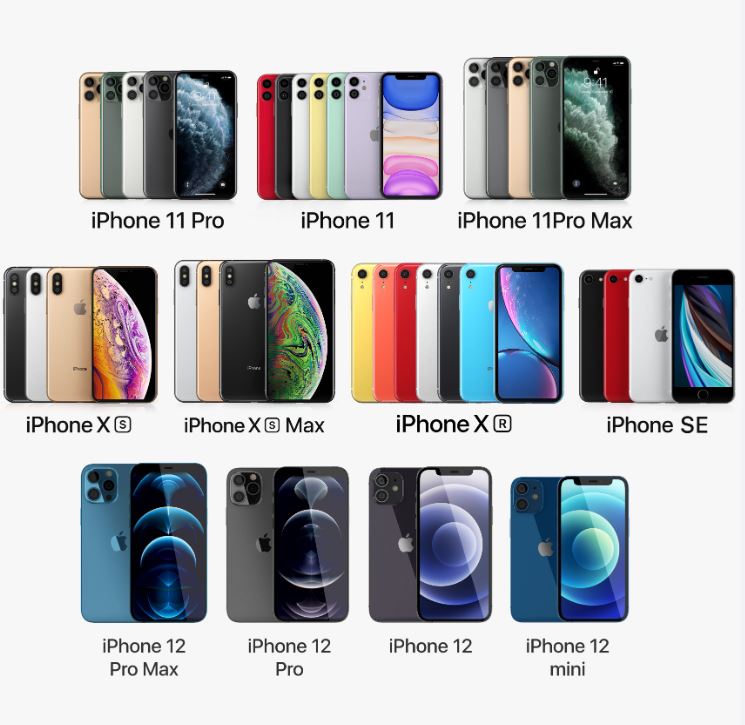
Models:
- iPhone 6 Series
- iPhone 7 Series
- iPhone 8 Series
- iPhone X Series
- iPhone 11 Series
- iPhone 12 Series
- iPhone 13 Series
- iPhone 14 Series
Display sizes ranged from 4.7 inches to 6.7 inches.
This period introduced edge-to-edge displays, OLED technology, Face ID, and higher screen-to-body ratios.
2023–2026: The Modern OLED Era
Models:
- iPhone 15 Series
- iPhone 16 Series
- iPhone 17 Series
Display sizes range from 6.1 inches to 6.9 inches.
Apple’s current lineup focuses on larger displays, thinner bezels, Dynamic Island, ProMotion technology, and improved OLED panels.
Apple iPhone Dimensions Chart (2007–2026)
| Model | Height (mm) | Width (mm) | Thickness (mm) |
|---|---|---|---|
| iPhone (2G) | 115.0 | 61.0 | 11.6 |
| iPhone 3G / 3GS | 115.5 | 62.1 | 12.3 |
| iPhone 4 / 4S | 115.2 | 58.6 | 9.3 |
| iPhone 5 / 5S / SE (2016) | 123.8 | 58.6 | 7.6 |
| iPhone 6 / 6S | 138.3 | 67.1 | 7.1 |
| iPhone 6 Plus / 6S Plus | 158.2 | 77.9 | 7.3 |
| iPhone 7 | 138.3 | 67.1 | 7.1 |
| iPhone 7 Plus | 158.2 | 77.9 | 7.3 |
| iPhone 8 | 138.4 | 67.3 | 7.3 |
| iPhone 8 Plus | 158.4 | 78.1 | 7.5 |
| iPhone X / XS | 143.6 | 70.9 | 7.7 |
| iPhone XR / 11 | 150.9 | 75.7 | 8.3 |
| iPhone XS Max | 157.5 | 77.4 | 7.7 |
| iPhone 11 Pro | 144.0 | 71.4 | 8.1 |
| iPhone 11 Pro Max | 158.0 | 77.8 | 8.1 |
| iPhone SE (2020/2022) | 138.4 | 67.3 | 7.3 |
| iPhone 12 mini / 13 mini | 131.5 | 64.2 | 7.7 |
| iPhone 12 / 13 / 14 | 146.7 | 71.5 | 7.4–7.8 |
| iPhone 14 Plus | 160.8 | 78.1 | 7.8 |
| iPhone 15 | 147.6 | 71.6 | 7.8 |
| iPhone 15 Plus | 160.9 | 77.8 | 7.8 |
| iPhone 15 Pro | 146.6 | 70.6 | 8.3 |
| iPhone 15 Pro Max | 159.9 | 76.7 | 8.3 |
| iPhone 16 | 147.6 | 71.6 | 7.8 |
| iPhone 16 Plus | 160.9 | 77.8 | 7.8 |
| iPhone 16 Pro | 149.6 | 71.5 | 8.3 |
| iPhone 16 Pro Max | 163.0 | 77.6 | 8.3 |
| iPhone 17 | 149.6 | 71.5 | ~8.0 |
| iPhone 17 Air | ~156.0 | ~74.0 | ~5.5 |
| iPhone 17 Pro | 149.6 | 71.5 | ~8.3 |
| iPhone 17 Pro Max | 163.0 | 77.6 | ~8.3 |
Which iPhone Size Is Best?
The best iPhone size depends on your priorities.
Best Compact iPhones
Ideal for one-handed use and maximum portability.
Recommended models:
- iPhone SE (2022)
- iPhone 12 mini
- iPhone 13 mini
Best All-Around iPhone Size
For most users, 6.1-inch to 6.3-inch models offer the best balance between portability and screen space.
Recommended models:
- iPhone 15
- iPhone 16
- iPhone 16 Pro
- iPhone 17
Best Large-Screen iPhones
Perfect for gaming, streaming, productivity, and battery life.
Recommended models:
- iPhone 15 Plus
- iPhone 16 Plus
- iPhone 16 Pro Max
- iPhone 17 Pro Max
Biggest iPhone Ever Made
As of 2026, the largest iPhones ever released are the iPhone 16 Pro Max and iPhone 17 Pro Max, both featuring 6.9-inch displays.
These models offer the largest viewing area in iPhone history while maintaining relatively slim bezels.
Frequently Asked Questions
What Is the Smallest iPhone Available?
The iPhone SE (2022) remains the smallest modern iPhone officially supported by Apple.
What Is the Most Popular iPhone Screen Size?
The 6.1-inch category continues to be the most popular size among consumers.
Which iPhone Has the Highest Resolution?
The latest Pro Max models feature Apple’s highest-resolution displays.
Are Bigger iPhones Better?
Not necessarily. Larger displays improve media consumption and productivity, while smaller models are easier to carry and use with one hand.
Final Thoughts
Apple’s iPhone lineup has expanded significantly since 2007, offering screen sizes that suit nearly every type of user. From compact models like the iPhone SE and iPhone 13 mini to flagship devices such as the iPhone 17 Pro Max, choosing the right iPhone ultimately comes down to your preferences, usage habits, and budget.
For most users in 2026, a 6.1-inch or 6.3-inch iPhone provides the ideal balance of portability, performance, and viewing comfort.